







Every enterprise has automated something — a script here, an RPA bot there. It helps, until the process changes. Automation is brilliant at repeating a known task and brittle the moment reality drifts from the flowchart.
Automation follows. Agents decide.
The difference between automation and agentic AI is not speed; it is judgement. An automated pipeline executes the steps you encoded. An agent is given an objective, then plans, acts, observes the result and adapts — across tools, data and time. It can handle the case you did not foresee, because it reasons about the goal rather than replaying a recording.
That is exactly why agentic AI is powerful — and exactly why enterprises hesitate. Autonomy without control is a liability, not an asset.
The trust problem
Ask any CIO why they have not turned agents loose on production and you will hear the same three words: governance, audit, accountability. An agent that can act can also act wrongly, at machine speed, with no paper trail. For regulated industries that is a non-starter.
Human-in-command, not human-in-the-loop
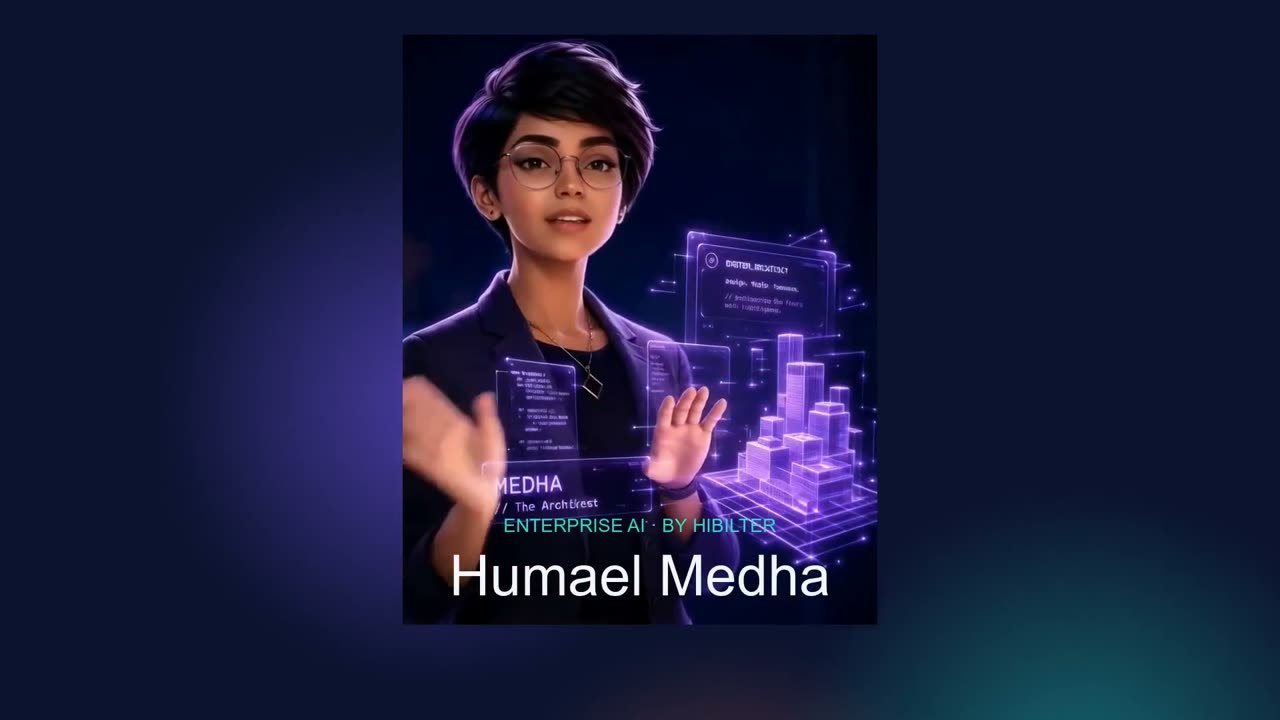
The answer is not to slow agents down with a person approving every keystroke. It is to design the system so humans command the high-risk decisions and agents own the rest. In Humael Medha, our AI software lifecycle, every run is versioned, every risky action is gated by quorum approval, and every step leaves an audit trail. The orchestrator — Maestro — escalates only the decisions that genuinely need a human.
- Agents do the work: plan, build, test, deploy, operate.
- Humans own the call: approve releases, sign off on risk.
- The system remembers: every action reproducible and inspectable.
Why it matters for the P&L
Governed autonomy is what turns a clever demo into something you can run a business on. You get the throughput of agents and the accountability your board requires — more shipped, fewer incidents, and a trail you can defend in any audit.
Automation made the known faster. Agentic AI makes the unknown manageable — as long as a human stays in command.