







Telecom operators run two hard problems at once: a network that generates more alarms than any team can read, and a subscriber base that churns over experiences the operator never fully sees. This use-case paper shows how three Humael products compose into one governed approach for carriers — Pulse closing the loop in the NOC across OSS and BSS, Vaani turning 100% of calls into real-time signal, and Samvaad carrying context across every channel — deployable as an overlay on the existing estate.
Two problems, one operator
A carrier lives between two pressures. On the network side, the NOC ingests well over 12,000 alarms a day and customers often feel an outage before the operator has correlated it. On the commercial side, subscribers churn over billing confusion, dropped support handoffs and experiences that never reach a dashboard. Most operators buy a different tool for each symptom. The opportunity is to apply one governed, agentic layer across both.
In the network: close the loop (Humael Pulse)
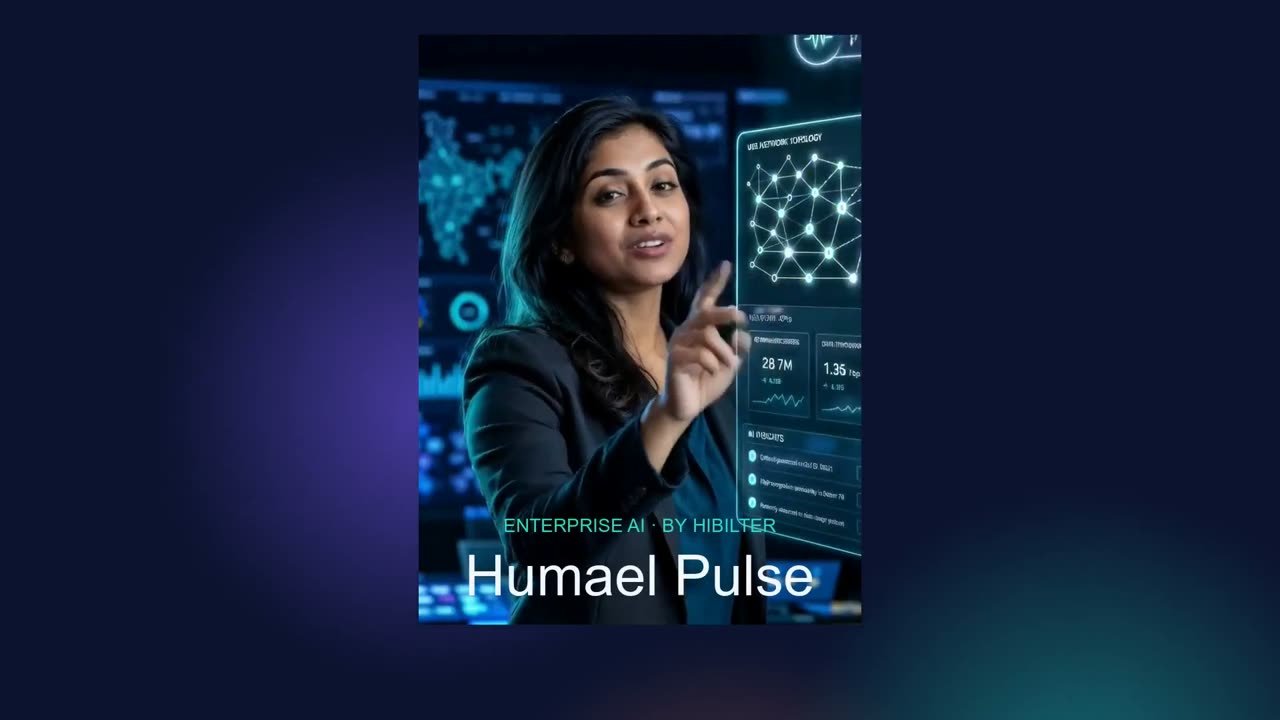
Humael Pulse runs autonomous analyst agents across OSS and BSS: detect, correlate against live topology, find explainable root cause, predict SLA breaches, and act with humans on the high-risk calls. A single fibre cut that lights up 412 alarms is presented as one explained incident; roughly 12,847 alarms collapse to 31 real incidents.
On the call: hear all of it (Humael Vaani)
Telecom contact centres run enormous call volumes and review a sliver of them. Humael Vaani takes live calls and scores 100% of conversations in real time for churn risk, sentiment and root cause — so a retention-risk subscriber is flagged on the call, not in next quarter's cohort report.
Across channels: one subscriber thread (Humael Samvaad)
Subscribers reach operators on SMS, WhatsApp, voice, email and app chat. Humael Samvaad unifies them so an agent that handled the last message knows it on the next channel — fewer dropped handoffs, better deliverability for OTP and campaign traffic, and a coherent experience that protects ARPU.
Why one governed layer wins
Because Pulse, Vaani and Samvaad share the same governance model — human-in-command, auditable, deployable on-premise — a carrier adopts agentic AI once, under one control regime, rather than integrating three black boxes. Start with whichever pain is sharpest (usually the NOC), prove it on live data, and extend across the subscriber relationship.
Conclusion
The network and the subscriber are not separate problems to a customer who just wants service that works. A single governed, agentic layer — closing the loop in the NOC, hearing every call, and carrying context across channels — lets a telecom operator run both with the throughput of automation and the accountability the regulator and the board require.