




Revenue leakage from mismatched contracts, purchase orders and invoices is among the lowest-risk margin available to any business — and one of the most consistently lost, because reconciliation happens late, manually, and on a sample. This paper makes the case for continuous three-way match: an always-on reconciliation across contract, PO and invoice that flags every discrepancy with evidence attached the moment it appears, recovers margin currently written off as cost of doing business, and makes the organisation inspection-ready by default.
The easiest margin is the one you already earned
Ask a CFO where the easy margin is and the honest answer is often uncomfortable: it is already leaking out of the company's own paperwork. Contracts that do not match the purchase order. Invoices that do not match either. Individually trivial discrepancies that, at scale and over time, quietly become a number written off as the cost of doing business.
This is the cheapest money in the business because earning it requires no new customers, no new products, and no new risk. It requires only catching what you already agreed to — on time.
The problem is cadence, not capability
Most finance teams do reconcile. The trouble is not that the work is undone; it is that it is done too late. Reconciliation typically happens weeks after the fact, by hand, on a sample, long after the leverage to recover has expired. By the time a spreadsheet surfaces the mismatch, the payment has cleared and the moment to correct it is gone.
A quarterly, sampled control cannot protect a continuous, full-volume process. The mismatch between how money moves (continuously) and how it is checked (periodically) is exactly where leakage lives.
Continuous, full-coverage, evidence-first
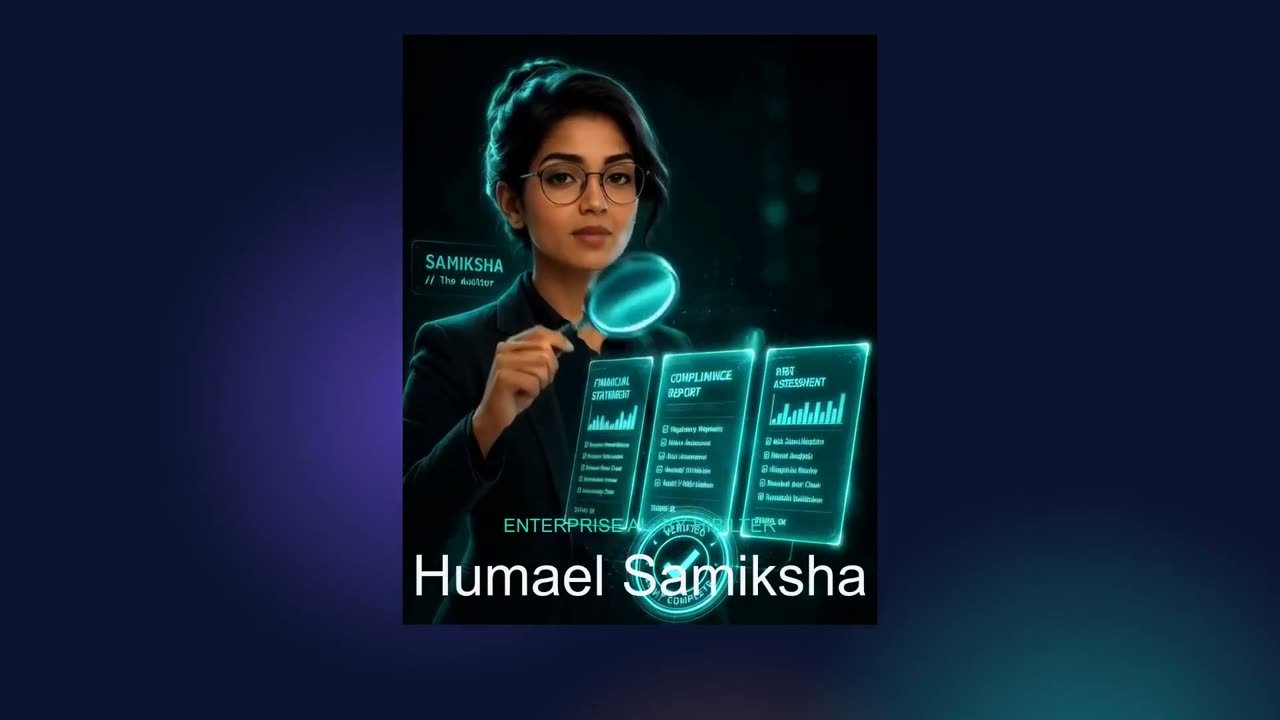
Humael Samiksha runs a continuous three-way match across contract, purchase order and invoice. Every document is reconciled as it arrives, every discrepancy is flagged the moment it appears, and — critically — the supporting evidence is attached to the flag, not left for someone to reconstruct later.
- Three-way match. Contract, PO and invoice reconciled against one another continuously, not at quarter-end.
- Full coverage. Every transaction checked, replacing the manual sample with complete coverage.
- Evidence attached. Each discrepancy arrives with the documents that prove it, so resolution is a decision, not an investigation.
- Inspection-ready by default. The audit trail is a by-product of the process, always current.
When the trail is never broken, audit season stops being a fire drill and becomes a query.
Closing the audit gap
Revenue assurance and audit-readiness are usually treated as two projects. In a continuous-match model they are the same project. Because every match and every exception is documented as it happens, with evidence attached, the organisation is inspection-ready by default. There is no scramble at quarter-end to reconstruct who approved what, because nothing was ever reconstructed — it was recorded in the moment.
This reframes the value. Samiksha is not 'another tool in the finance stack.' It is recovered cash and a closed audit gap, delivered by the same mechanism.
What the CFO measures
Where the discrepancies actually hide
Leakage is rarely one large error; it is the accumulation of small ones — a rate that does not match the contracted schedule, a quantity billed above what was received, a renewal priced on stale terms, a tax or surcharge applied inconsistently. Each is easy to miss in a sample and obvious in full coverage. The economic argument for continuous match is simply that the recovered total dwarfs the cost of the control.
Deployment
Samiksha works against your real documents and systems of record, in managed cloud or on-premise where financial data must stay inside the perimeter. It is the live product reconciling actual contracts, POs and invoices — not a model of the problem, but a control on it.
Conclusion
The revenue leaking out of your own paperwork is the lowest-risk margin in the business, and the only reason it stays lost is timing. Move the control from quarterly and sampled to continuous and complete, attach the evidence as you go, and two outcomes arrive together: cash you were writing off, and an audit gap that quietly closes itself.