

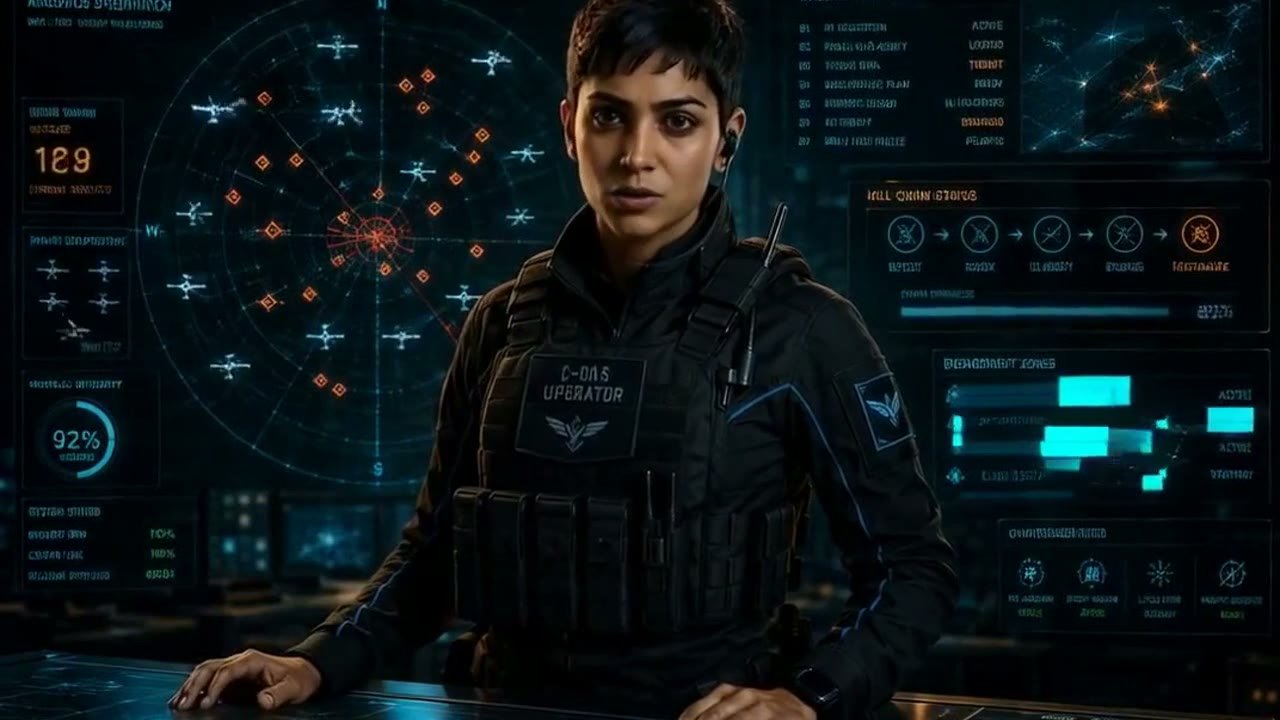

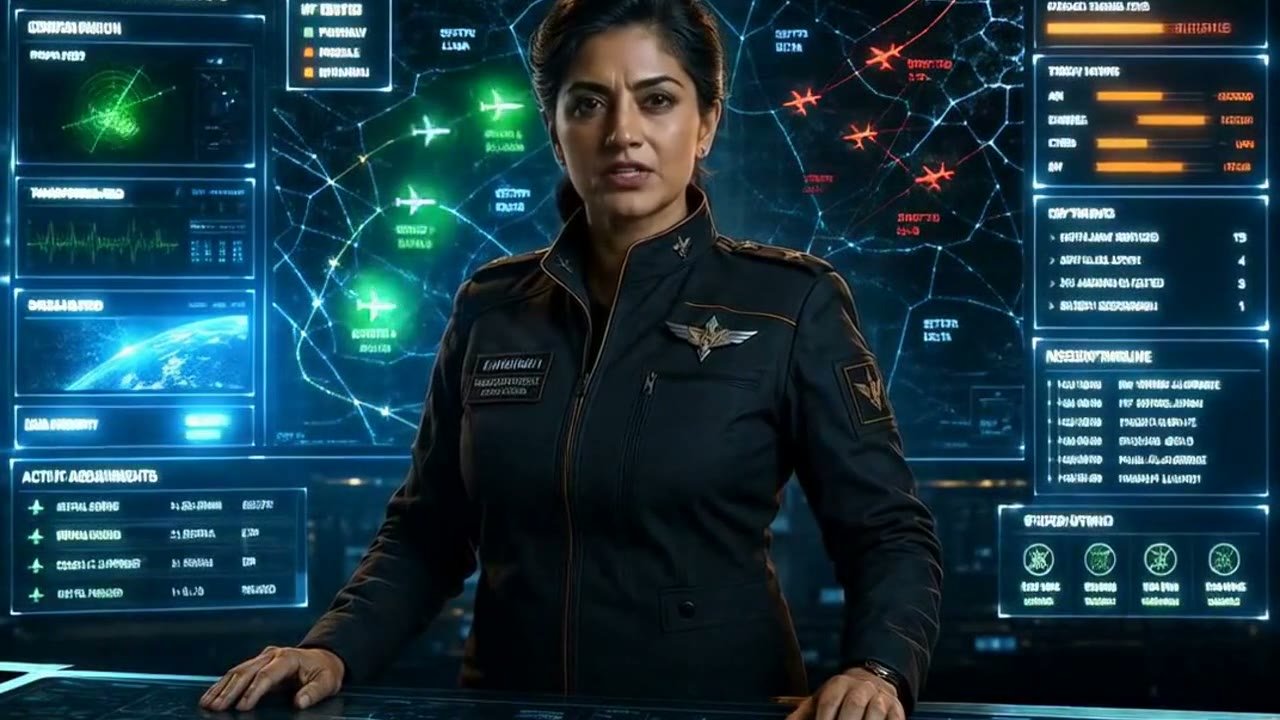





In defence, the decisive advantage is no longer the platform — it is the speed and trustworthiness of the decision. But defence AI cannot be bought off the commercial shelf: it must be sovereign, because the data cannot leave the perimeter; trustworthy, because a commander must be able to explain and command it; and resilient, because it has to keep working in contested conditions. This paper maps where agentic AI helps in modern defence — a trusted air picture, protection against hostile drones and drone swarms, threat prioritisation and mission command — and sets out the principles that make autonomy acceptable in defence. It introduces Hibilter's Vajra line, Sentinel and Aarambh, built sovereign and human-in-command from the ground up.
Decision-superiority is the modern advantage
Generations of advantage came from better platforms — faster aircraft, longer-range missiles, stealthier ships. That edge is narrowing. What now decides engagements is the speed and quality of the decision: who assembles the picture first, understands it first, and decides first. Artificial intelligence matters in defence precisely because it can compress that loop — but only if it does so without surrendering control.
The defence problem AI must actually solve
Defence AI is a different problem from enterprise AI, and the differences are disqualifying, not cosmetic. A system can be the most accurate in the world and still be unusable if it fails any one of three tests.
- Sovereign — the data and the capability stay under national or operational control. A capability that depends on someone else's cloud is a capability an adversary can deny or compromise.
- Trustworthy — the system must explain its reasoning in doctrinal terms and operate under human command, because no commander will stake lives on a black box.
- Resilient — it must keep working in contested, degraded conditions, where the force actually operates.
Where agentic AI changes the fight
Agentic AI, under human command, maps directly onto the hardest, most time-critical tasks in air defence and national security.
- A trusted air picture — one picture of the airspace that commanders can rely on.
- Real-time awareness — knowing what is in the airspace as it happens.
- Counter-UAS — protecting critical sites from hostile drones and drone swarms, under human command.
- Threat prioritisation — focusing attention on the threats that matter most.
- Mission command — turning intelligence into assignments, timelines and decision packages.
- After-action and doctrine — a complete record for review and learning.
The drone swarm forced the change
Nothing exposed the limits of human-speed, platform-centric defence like the autonomous drone swarm: many cheap, small, coordinated objects that saturate sensors, invert the cost-exchange, and overwhelm a single operator's ability to triage and decide. Counter-swarm is the clearest case where machine-speed, human-commanded autonomy is not a convenience but a necessity.
Vajra: the strike, built sovereign
Hibilter's Vajra line applies agentic AI to exactly these problems, and is sovereign and human-in-command by design rather than by configuration.
- Vajra Sentinel — autonomous counter-UAS: protects critical sites from hostile drones, under human command, with every decision ROE-checked and audited.
- Vajra Aarambh — sovereign defence intelligence: one trusted air picture, under your command — from threat prioritisation to mission command.
In defence, autonomy is only acceptable when it is sovereign, explainable, and under command.
Sovereign, auditable, human-in-command — the non-negotiables
These are not premium features; they are the price of entry. Vajra is built for sovereign deployment, scoped per customer, with a complete audit trail. Its recommendations arrive in the language the commander already uses. And it informs rather than overrides: the human owns every consequential decision.
Deployment posture
Defence AI has to meet the force where it operates. Vajra offers sovereign deployment options, scoped per customer, and works alongside existing command systems rather than replacing them.
Conclusion
Defence AI is won on sovereignty, trust and speed — in that order. Agentic, human-commanded systems deliver decision-superiority without surrendering control: they give the force one trusted air picture, protect critical sites from hostile drones, and keep a commander in command throughout. See first, decide first — sovereign, and under command.