

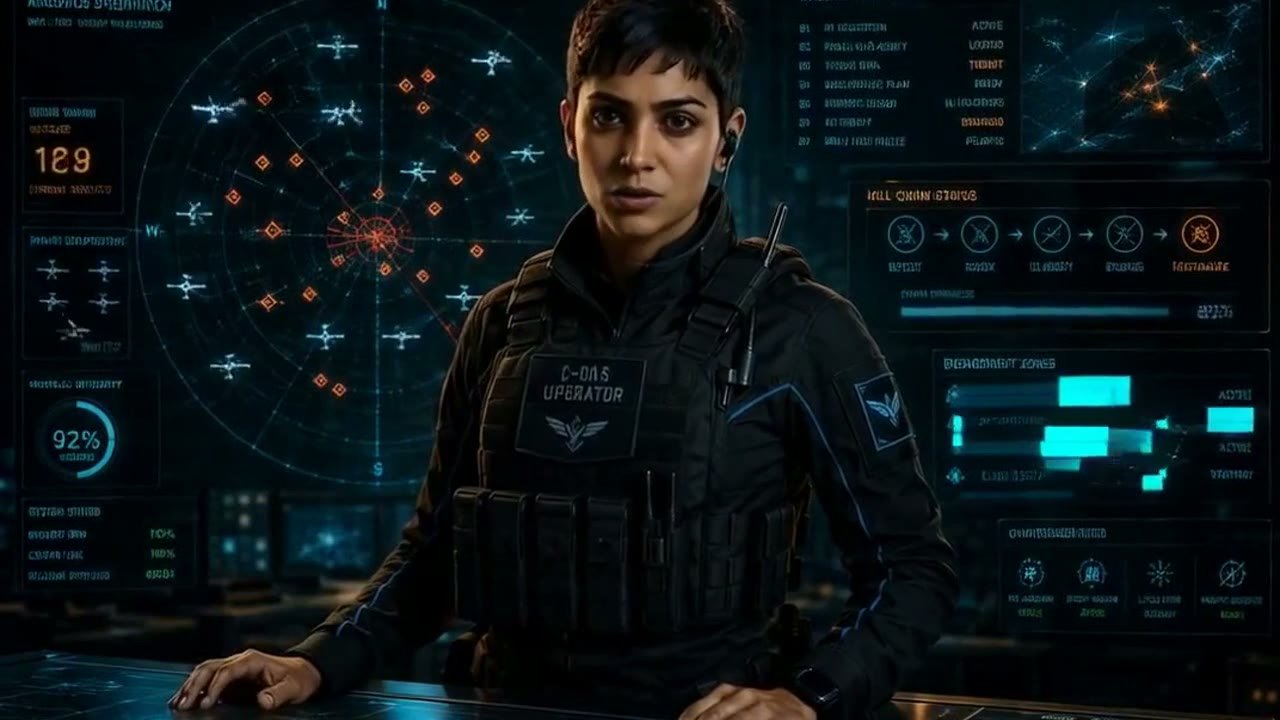

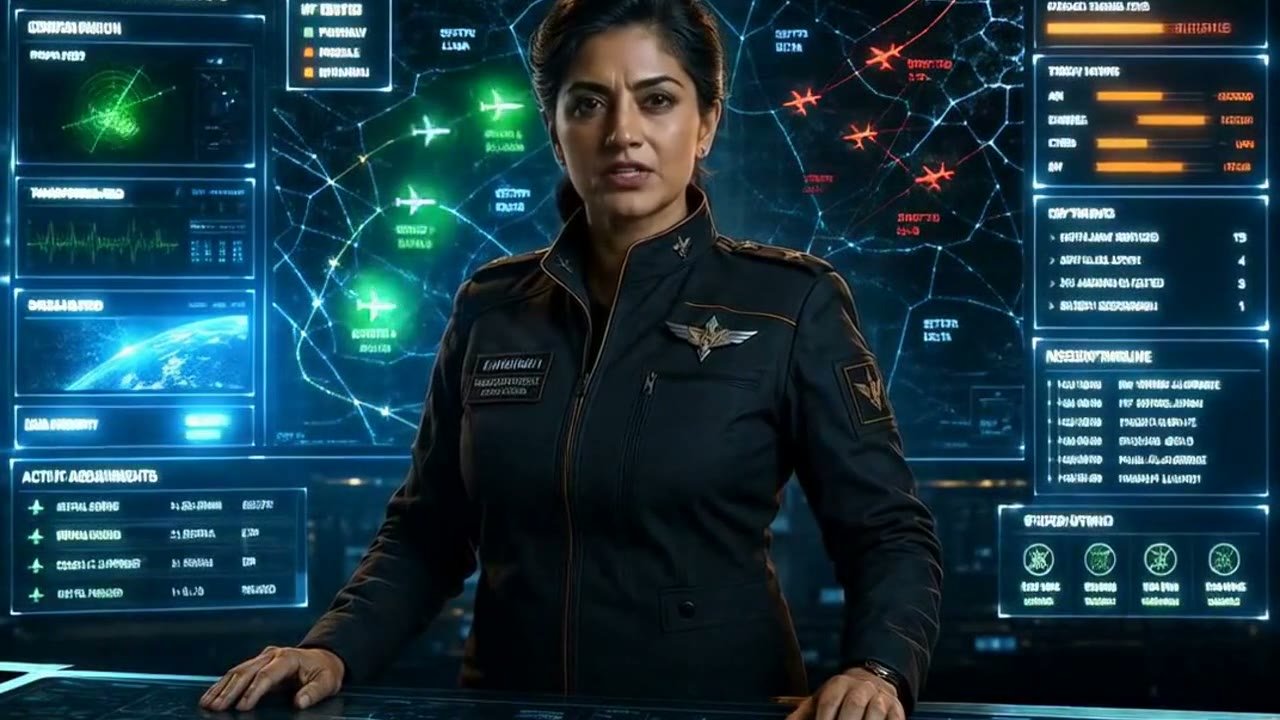





In contested airspace the decisive advantage is no longer range or speed — it is time-to-decision. But the picture a commander needs is scattered across radars, transponders, satellites and stovepiped systems, each with its own version of the truth. This paper describes sovereign ISR fusion: combining multi-source sensing into one trusted, IFF-resolved air picture; separating friend from foe in real time; assessing threat across air, surface, cyber and electronic warfare; and turning that intelligence into mission-ready command decisions and timelines. We cover the fusion and IFF-correlation architecture, the data-integrity model that makes the picture trustworthy enough to act on, the sovereign and air-gapped deployment posture, and the operational metrics of an air-operations centre that sees first and decides first.
The picture is fragmented, and fragments lose wars
Every sensor holds a partial truth. Primary radar sees position but not identity; secondary radar and transponders carry identity but can be absent, jammed or spoofed; satellites add wide-area context on their own cadence; ground reports and SIGINT add yet more, in yet another system. Today a commander reconciles those fragments in their head, under time pressure, and the side that assembles the whole picture first is the side that sees first.
Sensor fusion: one track, many sources
Aarambh correlates radar, transponder and satellite — and more — into one fused track per object, carrying its provenance. A contact stops being four rows in four systems and becomes a single entity with a position, an identity, a history and a confidence. Fusion is the foundation; everything else is built on having one trustworthy object to reason about.
- Radar — primary detection, position and kinematics across the volume.
- Transponder / ADS-B / Mode-S — cooperative identity and intent where it exists.
- Satellite / space — wide-area context, cueing and persistence.
- EW / SIGINT — emitters, jammers and non-cooperative identity cues.
Data integrity you can stake a mission on
A fused picture is only as good as the trust you can place in it. Every track in Aarambh carries a confidence and its source lineage, and the system scores the integrity of the picture as a whole — so a commander knows, at a glance, when the automation can be trusted and when a human should look harder. Trust is not assumed; it is measured and shown.
IFF: friend from foe, in real time
The hardest and most consequential call in air defence is identity. Aarambh resolves it continuously — friendly contacts, hostile contacts and unknowns — by correlating IFF interrogation, filed flight plans, transponder data and behaviour into one identity per track. The air picture is identity-resolved, not merely position-resolved, because a position without an identity is not a decision a commander can make.
A track you cannot identify is a decision you cannot make.
Threat assessment across domains
Modern threat is multi-domain. Aarambh assesses and ranks risk across air, surface, cyber and electronic warfare into one prioritised picture with key-threat focus, so finite attention and finite effectors go where risk is highest rather than where the last alert happened to fire.
- Air — hostile aircraft, missiles and UAS, by track and by formation.
- Surface — surface-to-air sites and surface threats that shape the air plan.
- Cyber — attacks on the sensors, links and C2 that the air picture depends on.
- Electronic warfare — jamming and spoofing that degrade the picture itself.
From intelligence to mission command
ISR that does not become a decision is overhead. Aarambh turns the fused, identity-resolved picture into mission-ready command outputs — active assignments such as escort, combat air patrol, ISR and tanker; mission timelines counted down to launch; and decision packages a commander can act on. The OODA loop — observe, orient, decide, act — closes inside one system instead of across a dozen.
Sovereign, air-gapped, human-commanded
Defence intelligence cannot live in someone else's cloud. Aarambh runs entirely within the national or operational perimeter, air-gapped, on a sovereign model, with a complete audit trail. And it informs rather than overrides: the human commander owns every consequential decision. The system assembles the picture and the options; the officer decides.
What an air-operations centre measures
Where Aarambh is deployed
- Air-operations centres and IADS — the single fused air picture behind air command and control.
- Air bases and airspace surveillance — local air picture and base air defence.
- Border and line-of-control surveillance — persistent watch over contested frontiers.
- Maritime domain awareness — fusing air and surface tracks over the littoral and open sea.
- Joint and coalition operations — one shared, trusted picture across services and partners.
- Counter-UAS integration — feeding and fusing with Vajra Sentinel for the drone-swarm fight.
Conclusion
See first, decide first is not a slogan; it is an architecture. Sovereign ISR fusion makes it operational — turning scattered, contested sensing into one trusted, identity-resolved picture, and then into command decisions and timelines, with a human in command throughout. The side that fuses first sees first, and the side that sees first decides first.